September 10, 2026
The Best Fence for Dogs: Over, Under, or Through
Most fences fail at dogs in one of three ways: the dog goes over, under, or through. Which one your dog will try is mostly down to the breed and the temperament, and it decides which fence you should buy.
Worth saying before anything else: a fence is not a substitute for supervision, and no fence holds a dog that is determined enough and left alone long enough.
Over
Height is the obvious answer, but the surface matters more than people expect.
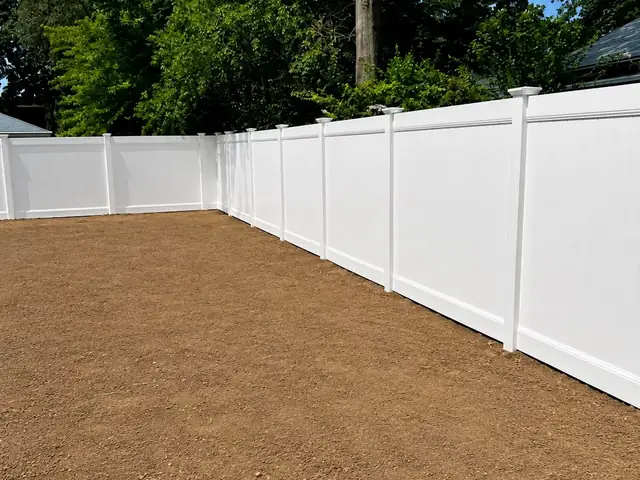
A six-foot solid privacy fence stops most dogs, because there is nothing to push off. The same six feet in ornamental aluminum with horizontal rails is a ladder — a capable dog gets two feet on the rails and is over.
If your dog jumps:
- Go to six feet minimum, and higher for the serious athletes
- Choose solid over open, or open with vertical pickets only
- Keep the inside face clear. Rails, lattice and a diagonal brace are all footholds
- Move what is beside the fence. A wood pile, an air conditioning unit, a raised bed or a garden bench is a launch pad, and dogs find them faster than owners do
Breeds that clear fences routinely: huskies, malinois, border collies, and a surprising number of mixed-breed rescues with something athletic in them.
Under
Diggers are simpler to solve and more commonly overlooked.
The fence needs to meet the ground. A gap of a few inches that looks like nothing is a starting point for an afternoon's work. On uneven ground a stepped fence leaves triangular gaps at the bottom of each step, and those are the first place a digger goes.
Options that work:
- A gravel board or kickboard along the bottom, closing the gap
- Burying the bottom of the fence several inches into the ground
- An L-footer — mesh turned outward at ground level and buried, so digging hits wire rather than soil
Tell us at the estimate if your dog digs. Closing the bottom while the fence is going in costs very little. Retrofitting it later costs a great deal more.
Through
This is the small-dog problem, and it is about gaps rather than height.
Picket spacing that looks tight to a person is not tight to a determined terrier, and a dog that can get its head through can usually get the rest of itself through. Chain link with standard mesh is fine for a labrador and useless for a dachshund puppy.
For small breeds, look at the gap rather than the height:
- Solid privacy panels — vinyl, wood or composite — have no gaps at all
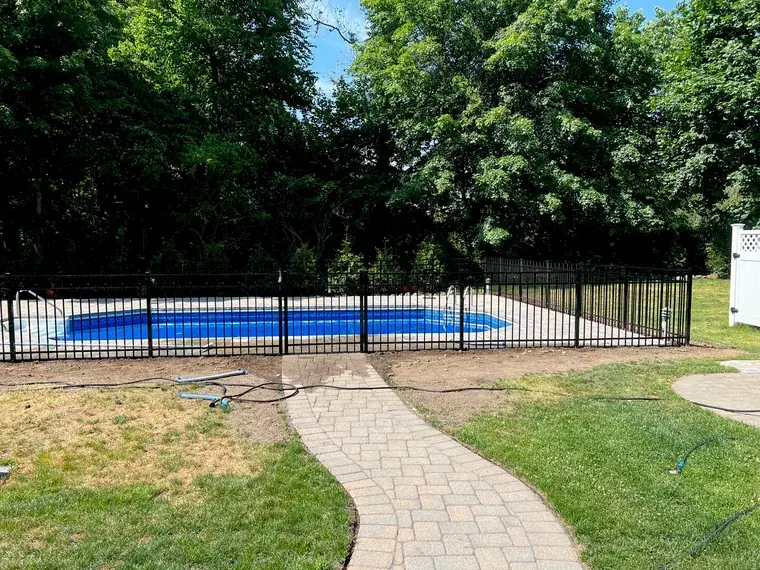
- Ornamental aluminum can be ordered with closer picket spacing, the same spec used for pool fences
- Standard chain link mesh will hold most dogs but not the smallest
Which material, in practice
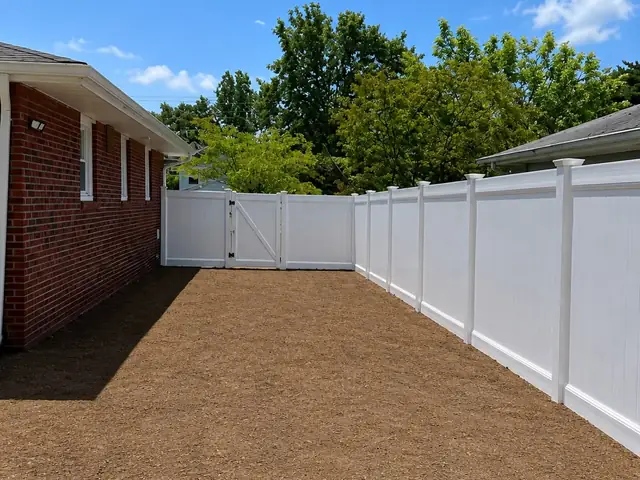
**Vinyl privacy** is the usual answer for a dog owner. No gaps, no footholds, nothing to chew, and nothing a dog can damage. It also solves the other half of the problem — a dog that cannot see the street is a dog that barks at it far less.
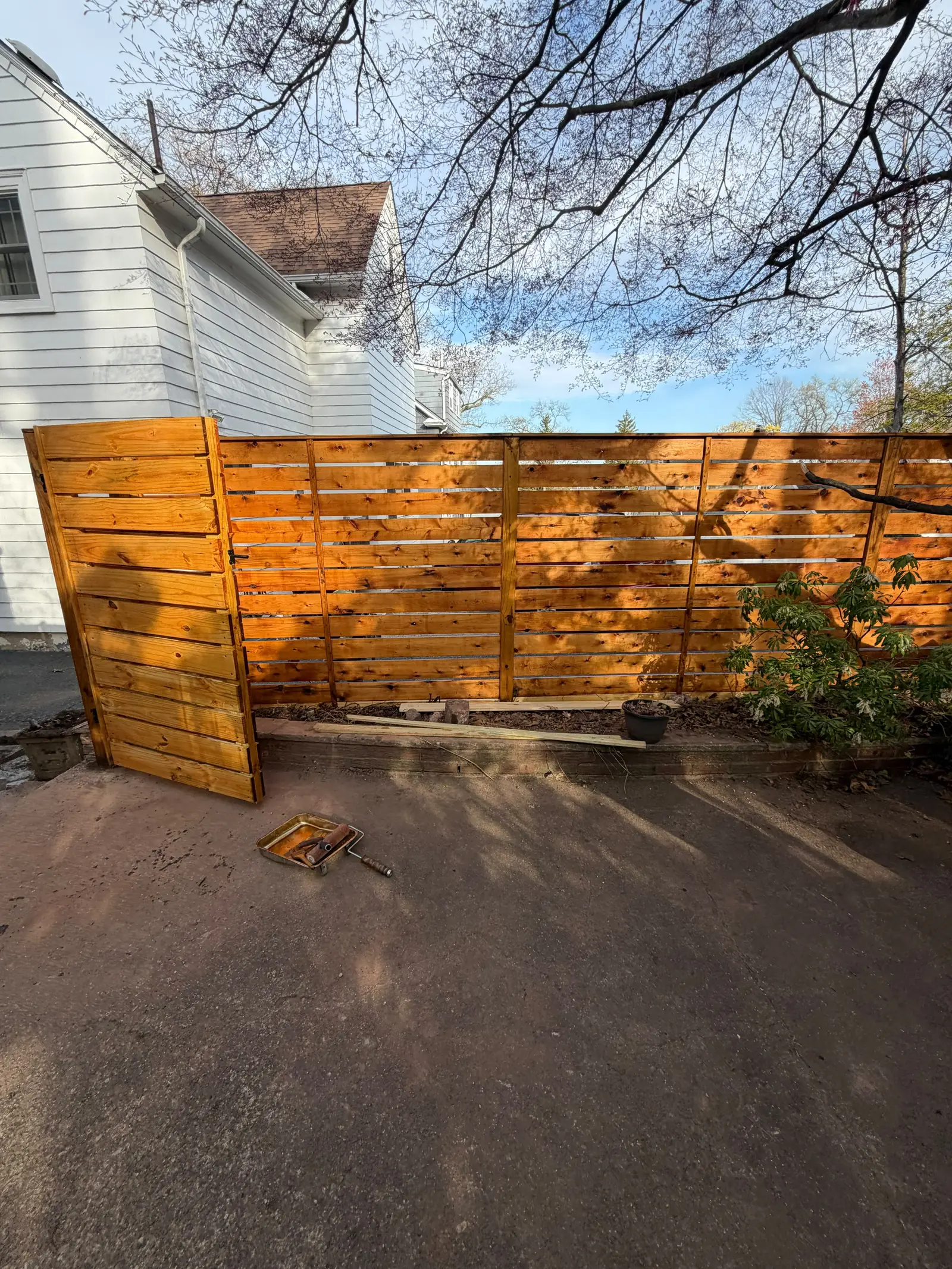
**Wood privacy** does the same job and costs less up front. The difference is that a bored dog will chew a wooden rail and scratch a wooden panel, and wood needs restaining anyway.
**Chain link** is the economical choice for a large, calm dog in a big yard. Cheap per foot, long-lasting, and easy to extend.
**Ornamental aluminum** suits a dog that is not a jumper, in a garden where you want to keep the view. Specify vertical pickets only and close spacing.
Gates are the weak point
Most escapes are through a gate, not over a fence. A gate that does not latch reliably will eventually be left ajar, and a self-closing hinge is worth the small extra cost on any gate a dog can reach. The same hardware the pool codes require works just as well here.
Also: a gate is only as good as the gap beside it. A gate that swings clear of the post leaves a slot when it is closed, and that slot is exactly where a small dog will go.
Tell us the dog
The single most useful thing you can do at the estimate is say what breed you have and what it does. A fence built for a beagle and a fence built for a husky are different fences, and it costs nothing to build the right one first time.
We install wood privacy from $32 per linear foot and vinyl privacy from $38, both installed. The visit is free, and we usually get out within 48 hours.
— Angelo Fence Team